
Exxon Mobil Corporation (XOM) has signaled that U.S. oil and gas producers are unlikely to significantly ramp up production despite potential policy shifts under a future Trump administration. Speaking at the Energy Intelligence Forum in London, Liam Mallon, head of ExxonMobil's upstream division, emphasized that the industry remains focused on economic sustainability over aggressive drilling.
"We're not going to see anybody in 'drill, baby, drill' mode," Mallon stated. He highlighted that radical production increases are improbable as most companies prioritize financial discipline and operational profitability.
Mallon also echoed recent remarks by ExxonMobil CEO Darren Woods, affirming the company's support for the 2015 Paris climate agreement and the U.S. Inflation Reduction Act. The Act provides tax incentives for carbon capture, hydrogen production, and sustainable aviation fuel development areas gaining traction within the energy sector.
ExxonMobil's alignment with these initiatives underlines its growing commitment to transitioning toward lower-carbon energy solutions while maintaining robust core operations.
Former President Trump, campaigning on a pro-drilling agenda, has pledged to boost domestic oil and gas production. However, given current market conditions, the feasibility of such plans remains questionable.
The United States leads global oil production, averaging more than 13.4 million barrels per day. With crude oil prices hovering in the high $60s to low $70s per barrel, a production surge risks further depressing prices, challenging profitability for producers.
ExxonMobil's stance highlights its balancing act between maintaining profitable oil and gas operations and embracing emerging renewable energy opportunities. The company's emphasis on refining efficiency and low-carbon initiatives highlights its adaptive approach in a changing energy landscape.
ExxonMobil currently carries a Zack Rank #3 (Hold).
Trump has said he wants to gut the climate law. A recent survey of clean energy companies shows doing so would have a devastating effect.
By Dan McCarthy
27 November 2024

Supported by

Canary Media’s chart of the week translates crucial data about the clean energy transition into a visual format. Canary thanks Clean Energy Counsel for its support of the column.
Repealing the Inflation Reduction Act — one of President-elect Donald Trump’s campaign pledges — would be disastrous not only for climate efforts but also for U.S. businesses.
That’s according to a recent survey of 929 U.S. clean energy firms commissioned by the nonprofit E2, which focuses on climate jobs. The research, conducted in August, targeted employers in energy efficiency, energy storage, transportation, and other industries. Most of the surveyed firms (61 percent) have been in business for over a decade.
Half the employers surveyed said they’d lose business and see revenue fall if the Trump administration killed the Inflation Reduction Act. Nearly four in 10 said they’d have to conduct layoffs. A smaller but significant portion of respondents — 15 percent — said that if the law were repealed, they’d have to shutter their business. Another 16 percent said they’d pick up and move to another country.
These potential outcomes are at odds with Trump’s vision of reinvigorating domestic industry. Nearly four in 10 of the participating firms are in manufacturing or assembly, and the Inflation Reduction Act has already sparked $115 billion in major manufacturing projects for electric vehicles, batteries, solar panels, and more.
Most of this new industrial activity is happening in Republican-leaning states — Georgia and North Carolina are the biggest beneficiaries of both investment dollars and jobs. And rural areas and smaller towns have disproportionately benefited from the law, meaning they’d also experience the brunt of the negative impact if it is repealed, per E2.
Because states that lean Republican are seeing so many economic benefits, experts have predicted that the law will prove difficult to undo, despite the GOP having control over the presidency and Congress.
In an August letter, 18 Republican representatives urged House Speaker Mike Johnson (R) not to fully repeal the law. “Energy tax credits have spurred innovation, incentivized investment, and created good jobs in many parts of the country — including many districts represented by members of our conference,” the representatives wrote.
Johnson, for his part, said in September that he’d use a “scalpel and not a sledgehammer” on the Inflation Reduction Act, though he also claimed that the law has been “terribly harmful to the economy.”
Even if the Trump administration decides to follow Johnson’s approach and forgo the sledgehammer, a scalpel can still do plenty of damage to U.S. clean energy manufacturing and the energy transition, which needs more, not less, investment.
Clean Energy Counsel is the only mission-driven law firm exclusively focused on renewable energy and clean technologies. From early-stage venture investment, offtake, site control, equipment supply, and EPC contracting, through project acquisitions, debt, and tax equity, we counsel clients through every stage of the project life cycle. Visit our website to explore how we can work together toward a sustainable future.
A statement by Centrica, which operates the Rough storage site, lays bare the UK's reliance on natural gas at a time when the drive for energy security and the battle against climate change are at odds with each other.

The owner of the UK's largest natural gas storage site has warned of depleted stocks by the end of winter due to early cold weather and a lack of wind power.
Centrica, which operates the Rough facility in the North Sea, said stocks could be lower compared to previous years due to higher demand.
It said that in addition to the chilly autumn, high pressure weather systems meant the country's wind power generation had fallen short, placing a greater need for gas to fill the energy void.
Gas stores are important as they enable countries to not only guarantee supplies during the transition to renewables but also avoid short term price spikes on wholesale markets.
High storage is also an important tool in moderating price swings.
But the UK has been particularly vulnerable in this space since Russia's invasion in Ukraine when sanctions meant key taps to Europe were shut off, forcing nations such as the UK and Germany to scramble for supplies.
 3:53
3:53
Energy bills set to rise after Christmas
Rough, a depleted gas field, had been decommissioned in 2017 but was partially reopened in 2022 in a bid to bolster resilience as the unprecedented gas price shock took hold, giving rise to the cost of living crisis.
The site currently accounts for about half the UK's stored gas capacity.
Centrica said it had already pumped 4.35 billion cubic feet of gas into the country's gas system in November to date.
That gas was powering up to 3.8 million homes on some days, the energy giant added.
The company, which also owns the country's largest household supplier British Gas, said: "The UK's gas storage is likely to be low compared to previous years this winter, according to analysis by Centrica.
"The colder November has led to early withdrawal from storage sites, reducing storage capacity in the UK before winter officially starts."
The statement by Centrica lays bare the UK's reliance on natural gas at a time when the drive for energy security and the battle against climate change are at odds with each other.
Data from National Grid on Thursday showed gas accounting for 31% of electricity output - behind renewables, including wind, on 52%.
Nuclear and Biomass were the next largest contributors.
Imports and gas played a bigger role earlier in the month when the first widespread frosts hit large parts of the country.

Storm Bert hits UK and Ireland
There has also been a widespread snow event, though that was accompanied by more wind.
Centrica said it could invest £2bn to upgrade Rough further, but it would need support from the government through a price cap and floor mechanism to make this viable.
Xinjiang Xinda Technology advances the construction of aluminium capacitor project in Emin County
02 Dec 2024 AL Circle
Xinjiang Xinda Technology Co., Ltd. commenced the construction of the medium and high-voltage forming foil project for aluminium electrolytic capacitors in Emin County this July. So far, an investment of RMB 300 million has been allocated to complete all the key infrastructures.
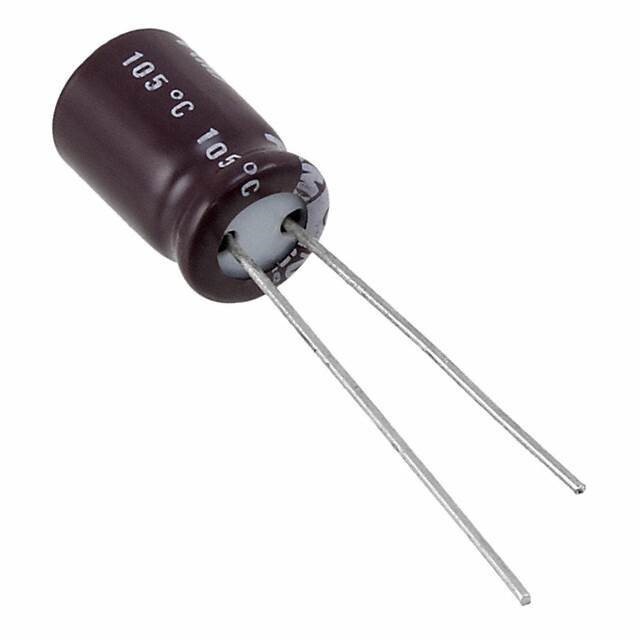
These include a reservoir, raw water treatment facilities, liquid preparation adjustments, and installing Workshop No. 2 and 20 production lines. By December, ten production lines are scheduled to become operational.This ambitious project entails a total investment of RMB 1.24 billion. It will feature 200 automated production lines dedicated to forming medium and high-voltage foil for aluminium electrolytic capacitors.
The construction includes five main workshops covering approximately 80,000 square meters, four auxiliary workshops spanning about 30,000 square meters, additional facilities such as warehouses for corrosion foil, foil formation, and chemical materials, and a dormitory building. The project is expected to be fully constructed and operational by December 2025, achieving an annual production capacity of 60 million square meters of medium and high-voltage forming foil.
In a recent tweet, Elon Musk declared that solar power will dominate future power generation. While ambitious, his statement aligns with compelling trends in solar capacity growth. This article delves into the data behind Musk’s vision, the transformative role of solar in the global energy transition, and the significant implications for the silver market.
"Solar power will be the vast majority of power generation in the future" - Elon Musk, Nov 12, 2024
Solar's Exponential Growth
According to the International Energy Agency (IEA), solar photovoltaic (PV) capacity has experienced explosive growth in recent years. From 2016 to 2023, solar capacity additions increased from 83.3 GW to 405.5 GW, with projections for 2024 reaching 467 GW and an impressive 672.6 GW by 2028. In 2023 alone, solar PV accounted for three-quarters of renewable capacity additions worldwide, underscoring its pivotal role in reducing global reliance on fossil fuels.
Utility-scale solar PV has become the most cost-effective option for new electricity generation in most countries, even amid rising commodity prices. Meanwhile, distributed solar PV—such as rooftop systems on homes and businesses—is set for rapid expansion, driven by high retail electricity prices and supportive policies from governments seeking to meet ambitious climate targets.
The Silver Connection
The adoption of solar PV technologies has a direct and significant impact on the demand for silver, an essential material in solar panels. Between 2015 and 2024F, silver demand for photovoltaics has soared by an astonishing 289% (source). As the global solar market continues to scale, silver demand is expected to rise even further, creating opportunities for growth but also challenges for supply chains reliant on this critical metal.
The Road Ahead
Solar power is not only a cornerstone of the clean energy transition but also a key driver of technological and economic transformation. The rapid expansion of solar PV capacity—supported by declining costs, innovation, and strong policy frameworks—validates Elon Musk’s vision of a solar-dominated future.
However, achieving this vision will require sustained investment and strategic planning to overcome challenges such as supply chain disruptions and material constraints, particularly for silver. Continued progress will ensure that solar power remains a dominant force in energy generation, capable of meeting growing global demand sustainably.
With solar PV poised to set new records year after year, the future of energy looks brighter than ever—and silver will play a pivotal role in this transformation.
https://www.miningvisuals.com/post/solar-power-a-key-to-future-energy-and-silver-demand
In 1947 a young copywriter by the name of Frances Gerety coined the tagline “A Diamond is Forever”, and De Beers created what today we call the ‘Diamond Dream’; positioning natural diamonds as rare, the ultimate symbol of love and commitment; expensive yet elegant, a symbol of success and wealth, a vault to hold your emotional memories and to pass them on from one generation to the next, a store of enduring value.
If that message still holds true, then the natural diamond industry should be in rude health. After all, during the last 20 years global GDP has increased by 160%, a CAGR (compound annual growth rate) of 5% and personal luxury goods sales have risen by a CAGR of 5.6%. Jewellery sales by luxury conglomerate Richemont increased almost sevenfold, a stunning CAGR in excess of 10%.
Except by comparison the performance of the natural diamond industry has been dire. Over that same period, diamond jewellery sales have risen at a CAGR of just 1.3% but in real terms they have fallen by around 22% and the value of the polished diamonds sold in jewellery has grown at a CAGR of 1%, a fall in real terms of 26%. Even diamond jewellery sales in the largest market, America, grew by a CAGR of just 2%, which in real terms equates to diamond consumption falling by 6% over that period. Polished prices at the end of last year were 16% below 2003 prices; in inflation adjusted terms, they were 50% lower. The industry has failed to tell its own story and because of the cannibalisation of sales from lab-grown diamonds, it is also in oversupply, Its very future is by no means certain. These are the unpalatable facts that the industry ignores at its peril.
In some ways the market is worse than in the early 1980’s, the difference being that back then De Beers controlled 90% of the market, so it was able to restrict supplies to the market, backed as it was by the balance sheet of Anglo American (at the time) the most powerful mining company in the world, and to drive new demand through its global marketing campaigns. However, there was also an additional ingredient crucial to both the industry’s survival and its success, its partnership with Botswana which ensured that the main producing company and the main selling company were one and the same; their interests were completely aligned. Few things in this world are predictable, but in the diamond industry one thing is certain; there is no zero-sum game; you don’t get a weak De Beers and a strong Botswana or vice versa, either both are strong and survive, or both are weak and wither on the vine.
And yet over the last two decades De Beers’ position in Botswana has got weaker and weaker. In partnership with the Government, it owns 50% of Debswana, which operates the two largest diamond mines and funds 50% their (very significant) future capital expenditure but it only receives 19.2% of the pre-tax profit. It also gets paid 1% of sales for providing and operating the technology to sort and value Botswana’s huge annual production and a 9% ‘marketing fee’ on the 75% of Debswana’s production which it sells.
But as Botswana’s mines get deeper and costs continue to rise this investment is far more marginal than the ‘dripping roast’ it once was. Any profit from the marketing fee, is split equally with the Botswana Government, but while any diamond price upside is split 50:50, if prices fall, De Beers alone takes the full hit. The whole deal is heavily weighted in favour of Botswana, but this year the market is so weak that Botswana’s total sales will likely be less than USD2 billion (versus USD4.6 billions in 2022).
For that marketing fee De Beers spends tens of millions of dollars promoting (and defending the integrity of) natural diamonds, funding their sales operations around the world, R&D (e.g. synthetic identification equipment); grading laboratories, the IP costs associated with everything, the ‘Tracr’ diamond tracking system, its administration and head office costs - in 2023 the total on these came to over USD700 millions, financed primarily by its profits from Botswana, and to a lesser extent by its operations in South Africa, Namibia and Canada. All of De Beers’ partners benefit, but none more so that Botswana for whom diamonds represent 30% of its GDP and half of the Government’s revenues. However, this comes at a heavy price. In the first half of this year, the whole De Beers Group reported an EBITDA (earnings before tax, interest depreciation and amortisation) of only USD300 millions with Botswana contributing just USD177 millions.
And those numbers were under the old De Beers/Botswana sales contract. Over a year ago, a new contract was agreed although negotiations weren’t helped by former President’s Masisi’s open dislike of De Beers. Indeed, the only deal he seemed to be willing to contemplate was one that was very damaging for them. De Beers’ share of Debswana’s sales would decrease to 50% by the end of the 10-year contract and De Beers would also fund a ‘Diamonds for Development Fund’ with an upfront investment of USD75 millions to help with Botswana’s economic diversification away from diamonds. The progressively lower marketing fees each year, and the contributions to the new fund (which could in theory total USD750 millions over the ten-year period) represented two huge financial hits to De Beers, but it, or more accurately its majority owner, Anglo American, was faced with a choice of caving in to a terrible deal or walking away: Anglo American caved in. Interestingly much anecdotal evidence suggests that had they been given the opportunity at an AGM, Anglo’s shareholders would have voted against the deal.
That deal remains unsigned because it seems that having already put the proverbial gun to De Beers’ head, President Masisi insisted on adding further punitive conditions. Then a month ago, everything changed when President Masisi’s party were almost wiped out at the General Election and the newly elected President Duma Boko revealed where things really stood with De Beers, “As matters stand, [De Beers is] thinking of walking away, not signing at all” and he pledged to repair their damaged relationship. Both he and De Beers have since radiated goodwill and enthusiastically spoken of the need to work together for everyone’s benefit. But the unsigned deal, even without President Masisi’s final conditions, remains a bad deal for De Beers and therefore a bad deal for Botswana.
In my opinion the deal fails to recognise that De Beers paying such a large percentage of the capital costs for so little return is no longer an economically viable model, but more than that, the interests of the producer (Botswana) are no longer aligned with the interests of the selling company (De Beers). The answer would seem to be that De Beers needs greater control over the production and sales and in turn, Botswana needs more control over De Beers. This may be the once in a lifetime chance to push the existing arrangement to the side and to start again; for both parties to take out a blank piece of paper and agree how De Beers and Botswana are going to succeed together because if they don’t both win, neither of them wins.
That also ties into the question of who (if anyone) will buy De Beers (in which Botswana already owns 15%) and how much its worth. In 2001 Anglo American acquired 45% of De Beers with an implied value for the whole company of around USD19.6 billion. When Anglo American bought out the Oppenheimer’s stake in De Beers in 2012, the implied valuation of De Beers had fallen to USD12 billion. Talking to people in the financial markets, the consensus seems to be that Anglo will be fortunate to get USD3 billion for De Beers, maybe less – incidentally, Anglo’s auditors signed off on De Beers being valued at USD7.6 billion. There are of course external factors involved, but that is how much value has been lost under Anglo American’s stewardship, but a major part of that is also a reflection of what has gone wrong with the relationship with Botswana.
Maybe at what seemed like one minute to midnight, evicting the last government and bringing in President Duma Boko, the people of Botswana have thrown a lifeline to a relationship that for fifty years has been the bedrock of the diamond industry, but any deal has to be a win for both parties. It’s time for the Government of Botswana and De Beers to seize the day; the question is, do they have the courage to do it?
“You can see the future first in San Francisco.
Over the past year, the talk of the town has shifted from $10 billion compute clusters to $100 billion clusters to trillion-dollar clusters. Every six months, another zero is added to the boardroom plans. Behind the scenes, there’s a fierce scramble to secure every power contract still available for the rest of the decade, every voltage transformer that can possibly be procured. American big business is gearing up to pour trillions of dollars into a long-unseen mobilization of American industrial might. By the end of the decade, American electricity production will have grown tens of percent; from the shale fields of Pennsylvania to the solar farms of Nevada, hundreds of millions of GPUs will hum.
The AGI race has begun. We are building machines that can think and reason. By 2025/26, these machines will outpace college graduates. By the end of the decade, they will be smarter than you or I; we will have superintelligence, in the true sense of the word. Along the way, national security forces not seen in half a century will be unleashed, and before long, The Project will be on. If we’re lucky, we’ll be in an all-out race with the CCP; if we’re unlucky, an all-out war.
Everyone is now talking about AI, but few have the faintest glimmer of what is about to hit them. Nvidia analysts still think 2024 might be close to the peak. Mainstream pundits are stuck on the willful blindness of “it’s just predicting the next word”. They see only hype and business-as-usual; at most they entertain another internet-scale technological change.”
Oil and gold prices rise after Assad's fall
Oil prices have climbed by more than 1% after the fall of Bashar al Assad’s regime in Syria injected even greater uncertainty into Middle East politics.
Brent crude futures have gained 78 cents to $71.90 a barrel while US crude futures rose by 87 cents to $68.07 a barrel.
Spot gold, seen as a safe haven, rose by 1% to $2,657.35 an ounce earlier, and is now trading by 0.8% higher.
Stock markets in Europe are mixed, with the FTSE 100 index rising by 19 points, or 0.2%, to 8,327, propelled by mining shares. Germany’s Dax and Italy’s FTSE MiB have both slipped by 0.2% while France’s CAC is 0.36% ahead.
Mining groups, carmakers and luxury stocks LVMH and Richemont all gained after signs of fresh stimulus measures to shore up China’s slowing economy. Beijing will adopt a more proactive fiscal policy and moderately loose monetary policy next year and step up “unconventional” counter-cyclical adjustments, state media reported, citing a Politburo meeting.
Saverio Berlinzani, analyst at ActivTrades, said:
It seems that the Assad regime has fallen in favour of a new Islamic regime, which could change the geopolitical scenarios in the Middle East. Who is behind the jihadist rebels? Someone who wants the end of Russia, Assad’s historical ally?
Trump, meanwhile, has already let it be known that aid to Kiev will decrease. It must be said that, even in such a fragmented context, the markets have held up well for now. The hope is that all this chaos on Europe’s doorstep can find a peaceful solution through international agreements. It is clear that the current change in Syria will bring changes to the geopolitical order of all countries in the area.
(Bloomberg) — China’s top leaders signaled bolder economic support next year using their most direct language on stimulus in years, as Beijing braces for a trade war when Donald Trump takes office.
President Xi Jinping’s decision-making Politburo vowed to embrace a “moderately loose” monetary policy in 2025, signaling more rate cuts ahead and shifting from a “prudent” strategy that’s held for 14 years.
The 24-man body also vowed “more proactive” fiscal policy at its monthly huddle, according to the official Xinhua News Agency, raising expectations for Beijing to widen the fiscal deficit from 3% at the annual parliamentary session in March. That would open the door to more central government borrowing to shore up the faltering economy.
The Politburo’s December meeting “sent the most aggressive stimulus tone in a decade,” Morgan Stanley economists including Robin Xing wrote in a research note, adding that “while the tone is very positive, implementation remains uncertain.”
The offshore yuan erased losses to trade 0.1% stronger on bets China’s economy will recover due to monetary and fiscal stimulus. Regional currencies also got a boost from the Monday readout, with Australian dollar rising 0.3% and New Zealand’s currency trimming losses.
While Politburo readouts never reveal new numerical economic targets, the vaguely worded statements give important clues on future policy. The December conclave sets the agenda for the larger Central Economic Work Conference that crafts priorities, such as the annual growth goal. That meeting is set to begin Wednesday, Bloomberg News earlier reported.
Top leaders tackled nearly every major problem plaguing the economy, with direct pledges to “stabilize” the stock market as well as the property sector fighting a years long slump. In a first, cadres touted “extraordinary” measures for counter-cyclical policy adjustment, language analysts said could hint at greater bond issuance or a stabilization fund to support the stock market.
Policymakers also elevated the importance of boosting consumption, making that the top goal of the meeting — potentially, a sign the work conference will make domestic demand the priority for 2025. Xi’s push for manufacturing to propel the economy has seen the US and European Union complain China is flooding their markets with cheap goods and prompted calls for Beijing to get its own consumers spending.
“The wording in this Politburo meeting statement is unprecedented,” said Zhaopeng Xing, senior strategist at Australia & New Zealand Banking Group. “The policy tone shows strong confidence against Trump’s threats,” he noted, referencing the US president-elect’s vow to impose a 60% tariff on Chinese exports that would decimate bilateral trade.
Policy Shift
The last time China adopted a “moderately loose” monetary policy was in the Global Financial Crisis as part of a bazooka stimulus package to prop up the economy. That’s something Beijing has vowed to avoid repeating, with officials providing just enough support to hit this year’s growth goal of around 5% without loading up debt.
The Politburo readout, however, sent markets a message Xi is feeling a new urgency. It’s a reminder “top leaders’ view on economic conditions has shifted substantially compared to last quarter,” said Martin Rasmussen, senior strategist at macro research firm Exante Data.
After second quarter growth fell short, policymakers started rolling out stimulus in late September. Economists widely expect another cut to the amount of cash banks have to keep in reserve before the year is out, while a rate adjustment is more likely to fall in the first quarter of 2025.
As well as rising trade tensions, China is battling its longest streak of deflation this century. That problem was on display earlier Monday in data showing producer prices falling in November for a 26th straight month. Consumer prices also rose at their slowest pace in five months, hovering around zero.
Falling prices have undercut the economy’s 4.8% growth so far this year, eating into corporate profits and pushing companies to cut investment as well as wages. While the People’s Bank of China (3988.HK) has slashed interest rates and offered more cash for banks several times, authorities have found it hard to spur greater borrowing.
The Politburo promised to “forcefully lift consumption” and drive domestic demand “in all aspects,” without directly mentioning the problem of deflation. That could indicate more rounds of the cash-for-clunkers program that’s operated as a consumption voucher, encouraging people to buy new electronics at a discount in exchange for their old products.
China’s Premier Li Qiang vowed to deploy “every means possible” to boost consumption at a meeting on Monday with heads of major international economic organizations in Beijing, including the International Monetary Fund, which has long called on China to expand domestic demand.
Fiscal Force
While the latest language on fiscal policy doesn’t mark a fundamental shift from the “pro-active” adopted in 2008, the addition of the word “more” signals government spending will be dialed up. A state media commentary Friday said Beijing had ample room to raise its budget deficit next year.
Fiscal spending is widely regarded as the most important element in any stimulus package, since private demand from households and companies has dwindled. While government spending has been weak this year, in November the Finance Ministry launched a $1.4 trillion rescue program for indebted local governments to free up regional officials to boost growth.
The specifics of the government’s budget, including the fiscal deficit and the amount of bonds it plans to issue, will likely only be revealed in March during the annual legislative session. But the Politburo readout will likely raise expectations for those targets.
“The Politburo statement is very positive,” He Wei, China economist at Gavekal Dragonomics. “It has everything that people wanted.”
—With assistance from Fran Wang, James Mayger, Qizi Sun, Rebecca Choong Wilkins, Lucille Liu and Jing Li.
(Updates throughout.)
https://finance.yahoo.com/news/china-eases-monetary-policy-stance-073152230.html
(Kitco News) – The outlook for oil prices next year is becoming more bearish as Trump’s agenda takes shape, but the key drivers of the gold rally remain in place, and gold prices are projected to continue rising in 2025, according to Max Layton, global head of commodities research at Citi.
Layton said the backdrop for oil was already quite bearish following the election, and that was before the base case included Trump levying significant tariffs on Chinese imports during the first quarter of 2025.
“The prospect of using tariffs to fund some kind of reduction in the budget deficit, or at least not growth in the budget, is going to potentially hang over the market, so tariffs related to that is going to be an issue in 2025,” he told CNBC International. “More broadly, I think Trump […] is going to be quite net bearish for oil. A lot of the statements that he said have been about how he wants to encourage drilling in the U.S., [and] Bessant has talked about three million barrels more supply growth over the term in the U.S.”
“You've got talk about stopping wars, not starting them, and we've done a lot of work in this annual outlook looking at the impact of what could happen if there's significant geopolitical de-escalations both in the Middle East and across Russia-Ukraine.”
Layton said that this geopolitical de-escalation would free up a lot of oil. “It would loosen or at least increase the visible inventory, as we think, and loosen some of the balance impact on the market,” he said.
He added that even if Trump doesn’t deliver on 100% of his promises, the scenario is still bearish for oil prices in 2025.
“In the base case, for example, we have Trump delivering directionally on most of his promises but not fully, certainly not in the first year,” Layton said. “So directionally, some more tariffs, directionally some de-escalation either in the Middle East or with Russia-Ukraine, but not necessarily in both. For example, we don't have Iran continuing to produce at full capacity for the next six to 12 months, we are assuming some impact. We're going to lose 200-300,000 barrels for the first couple of quarters of next year in the base case. But even with that, overall, it's still directionally net bearish for oil.”
He then turned to Citi’s projections for gold prices, which, unlike oil, remain very bullish despite the standout year the yellow metal enjoyed in 2024.
“It's been a spectacular year for gold,” he said. “I mean, you zoom out on a 50-year chart, and you can see this bull market. That's usually a sign that it's been quite a significant bull market.”
Layton said the bank expects the strong bull market to continue. “There's a couple of reasons,” he said. “One is that we've introduced a fundamental physical flows-based framework for gold pricing, which gives us some confidence that the underlying drivers of this bull market, which has been investment from central banks but also investment from wealthy OTC investors, and investors more generally who are concerned about high interest rates in the U.S. high debt levels in the U.S.”
“There's any number of concerns that people have,” he added. “Higher equity valuations, you've got people buying gold as a hedge against the medium-term impact of a U.S. slowdown. The U.S. has been slowing down for two years, two and a half years now, the labor market's been slowing down for two and a half years, real interest rates are still around 15-year highs. People are concerned about some of these things.”
“Until those things go away, there's going to be a lot of gold investment buying as a hedge,” Layton said. “And obviously, the central bank buying is for pretty structural reasons that aren't going away anytime soon as well.”
Gold prices are continuing to build on their strong performance to start the week, with spot gold rising as high as $2,691.94 on Tuesday morning, and last trading at $2,687.93 per ounce for a gain of 1.04% on the session.


