
(Bloomberg) – Venezuela’s acting President Delcy Rodríguez will meet Prime Minister Narendra Modi this week, with energy security expected to dominate discussions as India seeks to diversify crude supplies disrupted by the Iran war.
Bilateral discussions with Modi “will involve the full spectrum of India-Venezuela relations and explore avenues for further cooperation in the areas of energy, trade, investment, pharmaceuticals and health care,” Ministry of External Affairs spokesperson Randhir Jaiswal said on Tuesday.
Rodríguez’s June 3-7 visit coincides with India’s renewed effort to broaden its sources of crude after the Iran conflict blocked the Strait of Hormuz, a chokepoint through which almost 40% of the country’s oil supplies flowed before the war. The nation imports about 90% of the crude it consumes.
India received a parcel of Venezuelan oil in April after a year-long hiatus as Washington eased sanctions on the OPEC producer.
The shipments climbed to about 283,000 bpd in April, the highest since March 2020, according to data compiled by Kpler. The data analytics firm estimates June arrivals could increase to about 380,000 bpd in a sign of Venezuela’s growing importance in India’s energy mix.
Reliance Industries Ltd. has been among the largest buyers of Venezuelan crude after it signed a term agreement in 2012 to source as much as 400,000 bpd from Petroleos de Venezuela SA. The billionaire Mukesh Ambani-controlled company is among the few Indian refiners capable of processing the South American country’s heavy, sulfur-rich crude.
State-run ONGC Videsh Ltd. is also seeking to expand its presence in Venezuela. The overseas arm of Oil and Natural Gas Corp. holds stakes in the San Cristobal field and the Carabobo-1 block. ONCG Chairman Arun Kumar Singh said last month the company expects to receive a license under Venezuela’s new regime and is hopeful of increasing production from the assets.
For Caracas, deeper engagement with one of the world’s fastest-growing oil consumers offers an opportunity to rebuild its economy after years of isolation.
This will be Rodríguez’s sixth visit to India and her first since becoming acting president after the U.S. captured and ousted Nicolás Maduro in January. She will be accompanied by several cabinet ministers, including those in charge of foreign affairs, economy and finance, science and technology, communications, and transportation, Jaiswal said.
By Charles Kennedy - Jun 03, 2026, 5:00 AM CDT

Iranian drones and missiles struck Kuwait International Airport overnight, hitting Terminal One, killing at least one person, injuring several others, and causing what Kuwaiti authorities described as significant material damage. Kuwait immediately suspended air traffic, activated emergency procedures, and diverted flights to alternative airports.
In what is being viewed as one of the most direct Iranian strikes against Gulf civilian infrastructure since the conflict began, Iran’s Revolutionary Guard said the operation was retaliation for recent U.S. military actions and warned that regional states supporting American operations could face further consequences.
At the same time, U.S. Central Command said it intercepted additional Iranian missiles and drones targeting Kuwait and Bahrain before launching retaliatory strikes against an Iranian military control facility on Qeshm Island near the Strait of Hormuz.
Kuwait hosts major U.S. military facilities and serves as a key logistics hub for American operations across the Middle East, but until now had largely avoided becoming a direct target.
The escalation comes as negotiations between Washington and Tehran continue despite conflicting reports about their status. President Donald Trump insisted this week that discussions remain active and said a broader agreement could emerge within days, while Iranian officials have delivered contradictory messages.
On Wednesday, following the overnight attack, the UAE called for a united Gulf stance, playing into Israel’s hands.
“In light of Iran’s repeated aggression against the brotherly states of Kuwait and Bahrain, a firm, unified and cohesive Gulf stance is imperative. No Gulf state should be left to face these attacks alone, because the security of the Gulf Cooperation Council (GCC) states is interconnected, their interests are shared, and their destiny is one and the same,” UAE presidential advisor Anwar Gargash said in a post on X.
After assuring Goan consumers of adequate fuel stocks, oil marketing companies (OMCs) have called for the formation of special squads to strictly enforce the Essential Commodities (EC) Act to ensure uninterrupted supply of petrol and diesel to retail consumers in the state.
OMCs said on Monday that the rise in fuel demand in Goa by an average of 10.6 per cent in May is unusual and significantly higher than normal sales recorded by fuel stations. The three public sector oil companies attributed the surge to bulk consumers purchasing fuel from retail outlets.
They urged the state government to form special squads to take action against bulk consumers, hoarders, black marketers and unauthorised buyers who are allegedly diverting supplies meant for retail customers.
Stating that petroleum products fall under the provisions of the Essential Commodities Act, OMCs said the government’s intervention is necessary to prevent misuse and maintain smooth supply. They also appealed to industry associations to advise their members to procure diesel only through authorised channels.
The companies reiterated that petrol, diesel and LPG stocks remain adequate in Goa and are being replenished regularly through their distribution networks. Consumers have been advised to continue normal purchasing behaviour and avoid panic buying.
Goa’s petrol demand rose by an average of 8 per cent in May, while diesel demand increased by 13.3 per cent. The spike came during a month that saw four fuel price hikes, amounting to a total increase of Rs 7.50 per litre. Demand for both petrol and diesel was reported to be higher in South Goa compared to North Goa.
Petrol is currently retailing at Rs 103.94 per litre in Goa, while diesel is priced at Rs 95.83 per litre.
Goa has around 146 petrol pumps operated by the three OMCs — Indian Oil Corporation (IOC), Bharat Petroleum Corporation Limited (BPCL) and Hindustan Petroleum Corporation Limited (HPCL).
https://navhindtimes.in/goanews/omcs-seek-special-squads-to-curb-hoarding-ensure-proper-fuel-supply/

Venezuela's oil exports reached approximately 1,25 million barrels per day in May, marking the third consecutive month of growth. This figure emerges from information based on tanker movements and records from the state-owned oil company PDVSA, which in a statement confirmed the increase in shipments to the United States, India, and Europe after years of severe restrictions related to sanctions. According to the data, the total volume of oil and refined products exported by the South American country increased by 0,7% compared to April and by 61% compared to the same period the previous year. In total, 67 export shipments were recorded in May. The United States remained the main destination for Venezuelan oil, with approximately 558 barrels per day, followed by India with 427 barrels per day, and Europe with 169 barrels per day. All three regions increased their purchases compared to the previous month.
Among the main players involved in the trade are the US company Chevron, global trading firms Vitol and Trafigura, and the Indian group Reliance Industries. Chevron, the main joint venture partner with PDVSA, reported a decline in exports to approximately 269 barrels per day (bpd) from 308 in April, while international traders increased shipments to 787 bpd. Reliance Industries has consolidated its position as a major buyer of Venezuelan crude oil, further diversifying the South American country's trade flows. The Venezuelan Ministry of Petroleum forecasts production could reach 1,37 million bpd by the end of the year. This level, if confirmed, would represent a 22% increase compared to the end of 2025 and the highest level recorded since 2019, the year in which the United States imposed new sanctions on the Venezuelan energy sector.
The recovery in exports was supported by the easing of some U.S. restrictions and the entry of new international partners into the country's energy projects. This dynamic allowed Venezuela to reopen trade channels to markets it had not accessed for several years. At the same time, the country exported approximately 288 tons of petrochemical products and derivatives, a slight decrease compared to the previous month, and imported approximately 93 barrels per day of heavy naphtha, used to dilute domestically produced extra-heavy crude oil.
By HUGO DUNCAN, BUSINESS EDITOR
UPDATED: 09:55, 2 June 2026
The head of BP’s gas and low-carbon business is leaving just days after the abrupt sacking of chairman Albert Manifold.
William Lin’s departure is the latest from BP’s senior ranks, and he will leave in the third quarter of the year after three decades at the company.
The announcement came after BP last week ousted Manifold after less than a year in the job over ‘serious concerns’ about his conduct that had ‘surprised and disappointed’ the board.
Two chairmen and two chief executives have left in the past three years as BP has lurched from one crisis to the next.
The group’s chief executive Meg O’Neill is restructuring the business to renew its focus on oil and gas after an ill-fated foray into renewables under previous management.
In a message to staff, O’Neill, who took over in April, said: ‘We thank William for his leadership, impact, and long-standing commitment to BP, and wish him every success for the future.’
The turmoil at the top of BP has sparked fears that one of Britain’s most important firms could be blown off course in the middle of a crucial turnaround.

Bullying claims: BP ousted chairman Albert Manifold (pictured) after less than a year over ‘serious concerns’ about his conduct that had ‘surprised and disappointed’ the board
A $4 billion Chinese deal targeting a gold mining company in Mali is facing growing uncertainty as regulators in Beijing raise concerns over valuation and geopolitical risk.
Beijing’s regulators are casting doubt over a $4 billion Chinese deal to take over a gold mining company in Mali, Africa’s third-largest gold producer, raising concerns about valuation and political risk.
The move comes as China’s National Development and Reform Commission reviews Zijin Gold International’s proposed acquisition of Allied Gold, with officials questioning whether the valuation is too high and whether exposure to Mali’s mining sector introduces unnecessary geopolitical risk.
The regulatory headwinds have cast uncertainty over what would be the Hong Kong-listed firm’s first major deal since its IPO last autumn, according to the Financial Times.
The deal, agreed earlier this year, has already been viewed as a high-stakes bet on Africa’s gold industry at a time when bullion prices have surged to record levels, fuelling a wave of global mining mergers and acquisitions.
China’s National Development and Reform Commission has raised concerns over the valuation premium in the deal and the geopolitical risks tied to Allied’s operations in Mali, people familiar with the matter said.
The proposed acquisition, agreed in January at C$44 per share, was initially seen as a bold bet on Africa’s gold sector at a time when bullion prices surged above $5,500 per ounce. Prices have since eased to around $4,500/oz, cooling investor sentiment across the industry.

Mali risk factors weigh on investor sentiment
Allied’s key asset, the Sadiola mine, is located in Mali, a jurisdiction increasingly viewed as high-risk by global miners.
The country has faced violent attacks by separatist and jihadist groups, while its military government has detained foreign mining executives and renegotiated contracts with major operators including Barrick Gold and Resolute Mining.
Those developments have heightened concerns among regulators and investors about long-term operational stability in the country’s mining sector.
Meanwhile, Western mining companies continue to reduce exposure to higher-risk African jurisdictions, accelerating asset sales and portfolio restructuring. This retreat has created acquisition opportunities for Chinese miners, which are expanding overseas by targeting producing assets rather than greenfield developments.
Chinese mining groups have been active in this shift. Rival Zijin Mining has built a growing footprint across Mali, Côte d’Ivoire and Ethiopia, highlighting the increasing role of Chinese capital in Africa’s gold industry.
The original deal deadline of May 29 has passed, with Allied’s shares trading at C$34.73 — well below the offer price - signalling growing market doubt over completion.

Ruby Layram | 2nd Jun 2026
Gold has been one of the most talked-about assets of 2026.
After surging to fresh all-time highs earlier this year, the precious metal has experienced increased volatility over recent weeks as investors weigh up interest rates, geopolitical tensions, central bank buying and global economic uncertainty.
So, where could the gold price go next?
While nobody can predict the future with certainty, several major banks and institutions have recently updated their gold forecasts for 2026.
In this article, I’ll break down the latest gold price predictions from experts, what’s currently driving gold prices, and why I still think gold deserves consideration from long-term investors.
What Is the Gold Price Doing Right Now?
As of early June 2026, gold is trading around the $4,500 per ounce region after pulling back from record highs reached earlier this year. Recent price weakness has been driven by:
At the same time, geopolitical tensions remain loud, central banks continue accumulating gold and many investors remain concerned about inflation and government debt levels.
This has created a fascinating tug-of-war between short-term weakness and long-term bullish factors.
Gold Price Predictions for 2026
Let’s look at what some major institutions are forecasting.
UBS: $5,600-$5,900 Gold
UBS remains one of the more bullish banks on gold.
The firm recently projected gold could reach around $5,600 during 2026 before potentially ending the year around $5,900 per ounce. UBS believes ongoing central bank buying, economic uncertainty and demand for real assets will continue supporting prices.
In a separate update published at the end of April, UBS forecast:
The bank believes physical investment demand remains strong despite periods of volatility.
Goldman Sachs: $5,400 Gold
Goldman Sachs continues to maintain a constructive outlook on gold.
Earlier this year, the bank raised its end-of-2026 gold forecast to $5,400 per ounce.
Goldman cited:
The bank also expects emerging market central banks to remain major buyers throughout 2026.
J.P. Morgan: $5,243 Average Price, Potentially $6,000+
J.P. Morgan recently trimmed its short-term forecast after weaker investor demand and softer ETF inflows.
The bank now expects an average 2026 gold price of around $5,243 per ounce.
However, importantly, J.P. Morgan still believes gold could move towards $6,000 per ounce by the end of 2026 if demand strengthens later in the year.
Earlier in the year, the bank had even projected gold reaching $6,300 by the end of 2026.
Why Is Gold Moving Around So Much?
Many beginner investors assume gold only rises during periods of fear.
In reality, several major forces influence the gold price.
1. Interest Rates
This is probably the biggest factor right now.
Gold does not produce income like bonds or savings accounts.
When interest rates rise, investors can earn higher yields elsewhere, making gold slightly less attractive.
That is one reason gold has faced pressure recently as markets reassess the likelihood of prolonged higher rates.
2. Central Bank Buying
This remains one of the strongest long-term drivers.
Central banks worldwide have been buying gold at historically high levels as they diversify reserves away from traditional currencies.
Many analysts believe this structural demand is helping support prices even during pullbacks.
3. Geopolitical Tensions
Gold tends to perform well when uncertainty rises.
Ongoing tensions involving:
have all helped increase demand for safe-haven assets.
4. Inflation Concerns
Although inflation has cooled in some regions, many investors remain worried about long-term purchasing power.
Gold has historically been viewed as a hedge against currency debasement and inflation over long periods.
The Bullish Case for Gold
Supporters of gold believe several powerful trends remain intact:
Many analysts argue that these factors could push gold back towards fresh highs later in 2026.
The Bearish Case for Gold
Of course, there are risks too.
Gold could struggle if:
Some institutions have recently reduced short-term forecasts because ETF inflows and speculative demand have cooled significantly compared with earlier in the year.
Why I Still Like Gold for Long-Term Investors
Personally, I don’t buy gold because I expect it to double overnight.
I buy gold because I see it as portfolio protection.
When I think about investing long term, I don’t just think about growth. I also think about resilience.
Most of my portfolio is focused on growth assets like stocks and ETFs. But I like having some exposure to gold because it tends to behave differently when markets become stressed.
For me, gold serves three key purposes:
Diversification
Gold often moves differently from stocks.
That means it can help smooth out portfolio volatility during difficult market periods.
Protection Against Uncertainty
Nobody knows exactly what the next decade will look like.
We could see:
Gold has historically performed well during many of these environments.
A Long-Term Store of Value
Gold has survived:
For thousands of years.
That doesn’t guarantee future performance.
But it does explain why governments, central banks and wealthy investors continue holding it.
Is Gold a Good Investment in 2026?
Gold is probably most suitable for investors who:
It may be less attractive for investors seeking:
Gold is not designed to be the fastest-growing asset.
Its role is usually protection rather than explosive returns.
The Victoria prospect is situated approximately 2.5km south-east of the Artemisa North target.
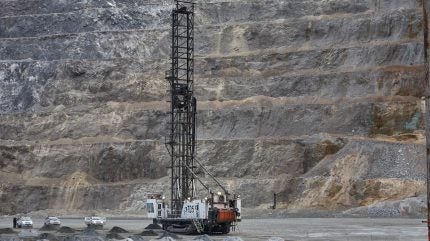
The drilling will target areas beneath artisanal and small-scale mining workings. Credit: BETO SANTILLAN/Shutterstock.com.
Great Southern Copper has commenced reverse circulation (RC) drilling at the Victoria porphyry copper target within its Especularita Project in Chile.
The company is testing for high-grade breccia-vein and disseminated copper mineralisation in the area.
Four drill-holes are planned to evaluate high-grade vein and disseminated mineralisation identified in outcrop.
The drilling will also target areas beneath artisanal and small-scale mining workings.
Surface rock chip samples from the Victoria prospect have returned grades of up to 6.9% copper, 1.85 grams per tonne (g/t) gold and 84.8g/t silver.
The Victoria prospect is situated approximately 2.5km south-east of the Artemisa North target, along the southern margin of the La Colorada lithocap.
According to Great Southern Copper, the target area remains largely untested below shallow gravel and scree cover, with mineralisation believed to be open along a significant footprint.
In a related development, drilling at the nearby Artemisa North prospect has recently concluded, with five holes totalling 796m.
The company reports that each hole encountered biotite-chlorite-magnetite alteration, along with varying levels of sulphide mineralisation.
The style and intensity of alteration confirm a porphyry copper-type system at Artemisa North.
All samples from four holes have been sent to ALS Laboratories in Santiago for analysis.
Great Southern Copper holds rights to own 100% of both the Victoria and Artemisa North targets.
CEO Sam Garrett said: “Victoria is the third of four targets to be tested with scout RC drilling in the current porphyry exploration programme.
“This programme is focusing on targets on the western and southern margins of the La Colorada lithocap that display geological, geochemical and spectral features that are characteristic of porphyry copper systems.”
The Especularita project is located at low elevation within the Cretaceous-age coastal metallogenic belt and is accessible to infrastructure and mining services.
Once the scout RC drilling programme at Victoria is finished, Great Southern Copper intends to move the drilling rig to the Artemisa South area to carry out similar tests for porphyry-related copper mineralisation.
An audio-frequency magneto-telluric geophysics survey is being carried out across the La Colorada lithocap, and plans to extend the Cerro Negro induced polarisation survey are in development, with work targeted to begin in June 2026.
https://www.mining-technology.com/news/rc-drilling-great-southern-coppers-victoria-prospect/
Vedanta Resources’ Konkola Copper Mines (KCM) has commenced a 60-day maintenance shutdown aimed at improving operational reliability across its mining and processing facilities and supporting future production growth. The company stated that the maintenance program covers key mining, processing, and supporting infrastructure assets and represents an important step in the mine’s ongoing operational recovery. Vedanta has previously committed to investing more than US$1 billion in KCM over the next five years to restore and expand production capacity. As one of Zambia’s major copper producers, Vedanta aims to increase KCM’s annual copper output to more than 300,000 tonnes in the coming years.

SHARES in Copper 360 gained 8% in early Johannesburg trade but there’s a long, long way to go before the junior miner recaptures investor confidence.
The key to its success lies in shifting enough higher-grade ore from “broken” surface deposits to the flotation mill at its Northern Cape mine, Rietberg. Simultaneously, it has to increase ore from the Rietberg underground mine.
Commenting in the company’s annual results announcement today, CEO Gordon Thompson said the stage was set after a turbulent year.
“With the pan concentrator commissioned in February 2026 and development work at Rietberg scheduled for the second half of financial year 2027, we are confident that MFP2 (modular flotation plant 2) can be reliably fed with sufficient-grade sulphide ore, upgraded by panning where needed, to return the company to profitability,” he said.
To be fair to Copper 360, there were three promising signs in its financial numbers for the year ended February. Firstly, losses narrowed 17% to R265m. Secondly, the balance sheet was recapitalised with total equity increasing to R1.25bn from R337m. Finally, liabilities halved from R985m to R505m.
The problem was shareholders paid for it via an expensive rights issue. Shares in the company are down a quarter year-to-date and 59% over the last 12 months.
Cash and cash equivalents improved to R84m but as Thompson makes clear the company needs to attract more funds. Before that it has to deliver on the mining side using the balance sheet it currently has. There is a distinct air of last-chance saloon about Copper 360.
Management stability is key to this. As Currency reported earlier this year, there was major boardroom stress, described as a coup, with the strange departure of mining veteran Graham Briggs, who went on a leave of absence — now permanent. Thompson was COO before taking on the task of running the company.
“Emerging from this year’s results are clear signs of a company with improved financial strength, a simplified and technically focused operating model, lower overall risk, and an enhanced platform from which to pursue future capital growth opportunities,” he said in today’s release. In a buoyant copper market, it is now or never for Thompson and his team.
https://www.miningmx.com/top-story/65511-copper-360-loses-less-promises-more/
Glencore's South African ferrochrome smelting unit said on Monday,1 June, it has cancelled plans to lay off as many as 1,500 workers after the country's energy regulator approved discounted electricity costs for the sector.
South African smelters are battling electricity costs, which have risen tenfold since 2008 amid growing competition from Chinese producers. Only 11 of the country's 66 smelters are still operational.
Glencore's ferrochrome business, Merafe Resources, suspended production at its Boshoek, Wonderkop and Lion smelters in May 2025, citing viability problems. The joint venture then began job cut proceedings the following September.
However, government interventions to reduce power tariffs by 54% to R0.62 ($0.0382) per kilowatt hour have brought relief to distressed smelting companies.
The discounted power tariff approved by the National Energy Regulator of South Africa marked "a further step towards stabilising operations and progressing the phased restart of the business", Merafe said in a statement.
The discount was extended to the entire ferrochrome industry, said Merafe, which negotiated for the tariff cut alongside fellow ferrochrome producer Samancor Chrome.
South Africa, the world's biggest chrome ore producer, has lost its position as the top processor of chrome into ferrochrome to China mainly due to high electricity costs, with a sharp increase in power costs forcing dozens of smelting plants to shut.
Smelters, which combine chromium and iron to produce ferrochrome, mainly used in steel production, consume huge amounts of electricity.
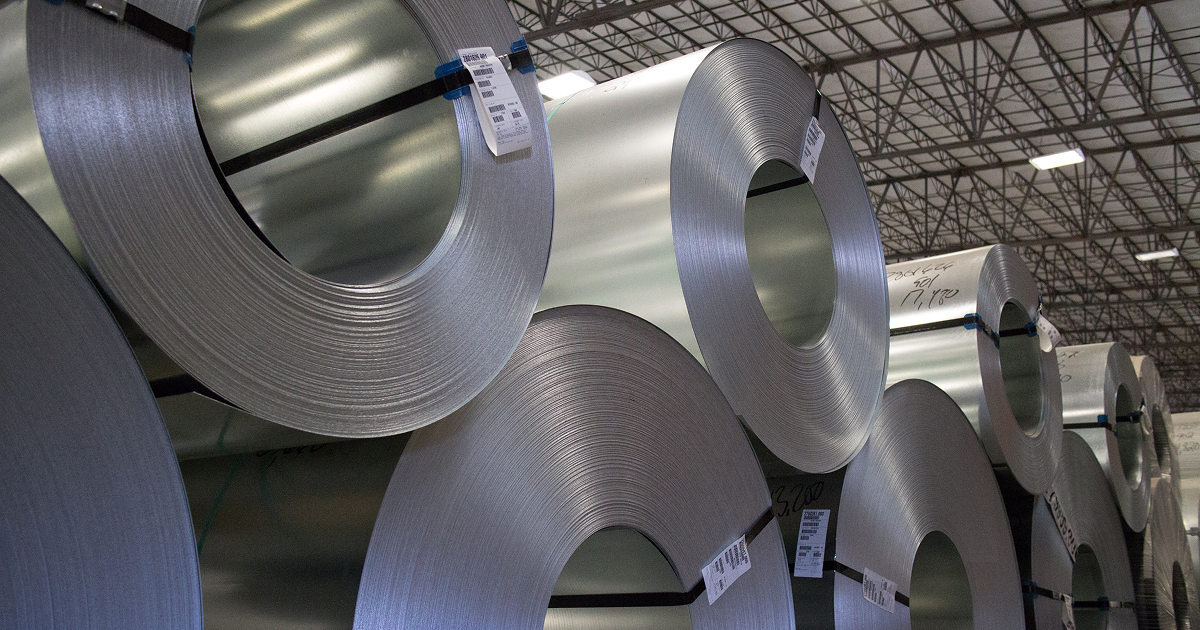
The price rose by $10 per short ton compared to the previous week
U.S. steel producer Nucor has once again raised its spot price (CSP) for hot-rolled coil by $10 per short ton compared to the previous week. This was announced in a letter the company sent to its customers on June 1.
Consequently, the new offer price is $1,105/ton.
The CSP for the joint venture California Steel Industries (CSI) will also increase by $10 per short ton—to $1,155/ton.
The letter to customers notes that delivery times remain unchanged—3 to 5 weeks.
Nucor has been raising its spot price for hot-rolled coils by $5–15/ton since late January of this year.
According to SMU, as of May 26, prices for hot-rolled coil in the U.S. ranged from $1,070 to $1,120 per short ton, with an average price of $1,095/ton. Currently, the portal notes, citing market sources, service centers are having to contend with supply delays and rising supply levels.
It should be recalled that the global hot-rolled coil market showed mixed dynamics in April 2026. In the U.S. and China, prices continued to rise due to limited supply and expensive raw materials, while in the EU, the domestic segment remained under pressure from weak demand amid rising import costs.
In the U.S. market in April, the availability of spot volumes from mills was limited, and delivery times for certain grades continued to lengthen.
https://gmk.center/en/news/nucor-has-raised-the-price-of-hot-rolled-coil-to-1-105-per-ton/
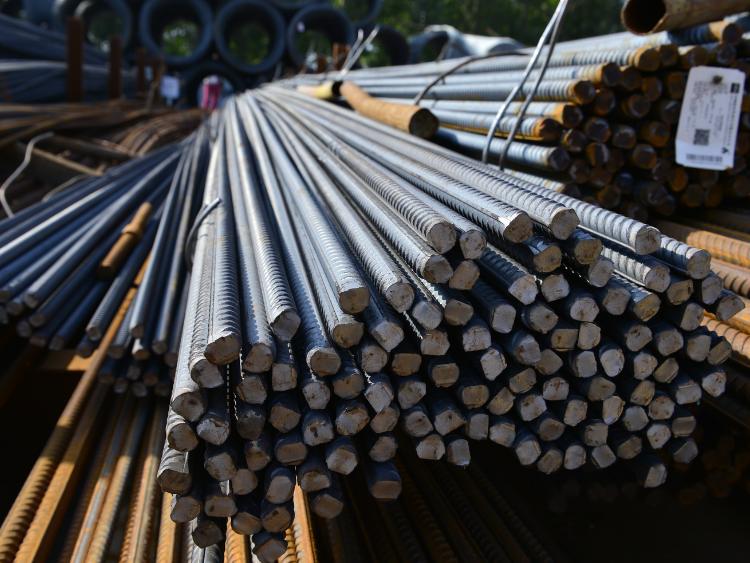
Polish domestic wire rod prices remained steady in the week to Friday May 29, while rebar prices widened, with slow market activity due to weak demand.
Market participants reported reduced activity, with fewer offers and indications heard during the week due to the holiday season in Europe.
“Demand is rather average; worse than last week,” one distributor source told Fastmarkets.
The tradable price for wire rod was said to be around 3,000-3,050 zloty ($828-841) per tonne delivered.
Fastmarkets’ weekly price assessment for steel wire rod (drawing quality), domestic, delivered Poland, was 3,000-3,100 zloty per tonne on Friday, unchanged week on week.
In contrast, rebar prices widened over the same period.
Tradable prices were reported within the range of 2,830-2,950 zloty per tonne CPT, compared with 2,850-2,900 zloty per tonne CPT on May 22.
Market participants said that higher offers of 2,950 zloty per tonne had been heard, although trading at those prices was limited.
“There is low demand and high inventories,” a seller source told Fastmarkets.
Fastmarkets’ weekly price assessment for steel reinforcing bar (rebar), domestic, cpt Poland, widened to 2,830-2,950 zloty per tonne on Friday, from 2,850-2,900 zloty per tonne the previous week.
https://eurometal.net/polish-steel-rebar-price-range-widens-in-slow-market-wire-rod-prices-stable/