

Soaring copper orders from South Korea and Taiwan led to the biggest rise in requests for withdrawals from London Metal Exchange warehouses since 2013, pushing copper prices to a new record high on Wednesday.
The price of copper increased by another 2.4% on the London Metal Exchange (LME) early on Wednesday, to exceed $11,400 per ton, which beat the previous record high from just two days ago.
Copper prices have jumped by around 30% so far this year, with the gains mostly occurring in the second half, amid a series of supply issues in key producing countries and speculation about potential U.S. import tariffs.
This year, copper prices have rallied amid threats from the Trump Administration to impose tariffs on the industrial metal crucial for electrification and grid expansion. Trump backed off plans for a tariff, for now, but traders are nevertheless amassing copper into the U.S., which has hiked copper prices at the Comex exchange in New York and shrunk supply elsewhere in the world.
Demand signs have become more bullish in recent weeks, with economies faring better than expected in the tariff chaos of the Trump Administration.
The price of the metal, which is used in industry, electronics, electrification, and construction, is often viewed as a gauge of economic health.
On the supply side, several accidents at mines in Chile and Indonesia earlier this year have reduced global copper production and tightened the physical market.
In recent weeks, traders have been aggressively positioning for deeper deficits next year, analysts and industry executives said at a Fastmarkets webinar last week.
The macro trends will be key for copper markets and pose the biggest uncertainty to demand and prices in 2026, they noted.
“The macro overview matters the most, because the macro then essentially moves the demand numbers,” said Scott Crooks, principal analyst at Chile’s state copper mining giant CODELCO.
“It’s the tweets, policies that come out of different countries as they try and realign in this new world we live in. I think that is what’s really going to move the needle.”
The presidents of Rwanda and DRC are expected in Washington to sign the Congolese peace deal.
By Julian Pecquet in Washington DC

Rwanda President Paul Kagame (L) and President of the Democratic Republic of Congo Félix Tshisekedi (R) © Fayez Nureldine and Ludovic Marin/AFP)
After months of negotiations and several false starts, Presidents Félix Tshisekedi of Democratic Republic of Congo (DRC) and Paul Kagame of Rwanda are expected to visit the White House on Thursday, 4 December to sign onto the next phase of President Donald Trump’s minerals-for-security proposal, Congolese and Rwandan sources tell The Africa Report.
US-brokered talks between the two countries to end three decades of conflict in eastern Congo began in earnest in April when Trump dispatched his daughter’s father-in-law Massad Boulos to the region to try to broker a deal. Foreign Ministers Olivier Nduhungirehe of Rwanda and Thérèse Kayikwamba Wagner of DRC signed a peace deal at the State Department in June, but the Rwandan-backed M23 rebel group continues to sow violence in the border region.
Back in early November, technical teams from the two feuding nations took the next step by initialising the Regional Economic Integration Framework (REIF), which holds the promise of billions of dollars in US investment. The framework outlines key areas for fostering economic cooperation and development between the two neighbours.
“The economic angle is extremely important because this is new,” Boulos told The Africa Report in an exclusive interview back in July. “This is the first time that they are creating a framework for regional economic integration, which includes not just trade aspects, but also infrastructure.”
The Congolese, however, had balked at signing on as long as Rwandan forces retain influence across the border, and insisted on a clause that says the REIF cannot be implemented without Rwandan troops withdrawing. Its successful implementation hinges on the neutralisation of the Forces Démocratiques de Libération du Rwanda (FDLR, an armed group active in eastern Congo founded by former Hutu genocidaires) and the removal of ‘defensive measures’ by Kigali.
With Trump eager to claim another peace deal and Tshisekedi and Kagame keen not to be seen as spoilers, the conditions are ripe for the two feuding leaders to shake hands in Washington. Whether their signatures on a piece of paper amounts to any real change on the ground, however, will remain to be seen.
Congress tackles defence, Muslim Brotherhood and China
Congress is back in town with a packed schedule through Christmas week after a 43-day government shutdown followed by the Thanksgiving holiday.
Top of mind for lawmakers is the passage of the annual military bill known as the National Defence Authorization Act (NDAA) before the end of the year. The final bill, still under negotiation, will likely feature several recommendations for Africa policy.
On Wednesday, 3 December, the House Foreign Affairs Committee marks up a number of bills, including legislation requiring the president to designate the Muslim Brotherhood as a foreign terrorist organisation.
The sanctions bill from Florida Republican Mario Díaz-Balart would specifically apply to branches of the 100-year-old group operating in three dozen countries including the African nations of Algeria, Egypt, Libya, Mauritania, Morocco, Somalia, South Africa, Sudan and Tunisia. Last week, Trump ordered officials to investigate whether the Brotherhood’s Egyptian branch should be listed as foreign terrorist organisations and specially designated global terrorists.
On Tuesday 2 December, the Senate Foreign Relations Committee holds a hearing on ‘Countering China’s Challenge to American AI Leadership’. The United States and China are in a race to set global standards around artificial intelligence, with Africa a key battleground.
And on Thursday 4 December, the House Committee of Science, Space and Technology holds a hearing on ‘China’s space rise and the risks to US leadership’. Here again, Africa is a strategic battlefield, with Beijing signing two dozen bilateral space partnerships with countries across the continent in recent years to create a global surveillance network and displace the US as the world’s dominant space power.
Murali Krishnan in New Delhi
Russia and India appear willing to resist US pressure and build even stronger ties. Both Vladimir Putin and Narendra Modi rely on their partnership as part of a broader geopolitical strategy.

Russian President Vladimir Putin is set to arrive in India on Thursday for a two-day visit, underscoring a partnership between Moscow and New Delhi that has endured for nearly eight decades of geopolitical upheavals.
At the invitation of India's Prime Minister Narendra Modi, the Kremlin chief is due to attend the 23rd India-Russia annual summit in the Indian capital.
This is Putin's first visit to India since Moscow launched its full-scale invasion of Ukraine in 2022.
The two countries have signaled they want to strengthen their "Special and Privileged Strategic Partnership" — an official designation for Russia-India ties adopted in 2010 — and "exchange views on regional and global issues of mutual interest," India's Ministry of External Affairs said in a statement.
Ahead of the visit, Kremlin spokesperson and Putin's chief of staff Dmitry Peskov underlined the importance of defending the India-Russia bilateral relationship and trade.
His comments come as India is facing US tariffs over buying Russian oil.
Russia continues to navigate an ever-growing number of Western sanctions over the war in Ukraine.
"We have to secure our trade from pressure from abroad," Peskov told journalists.
Peskov highlighted that discussions are underway on alternative payment options to bypass sanctions.
Also on the agenda is the transfer of workers, as more and more Indians seek employment in Russia. Talking to reporters, he also referred to Russia's defense deals, including the sales of S-400 anti-aircraft defense systems, Sukhoi-57 fighter jets and small modular nuclear reactors.
India is by far the biggest buyer of Russian weapons internationally. Also, Russia is now supplying over 35% of India's crude oil imports, compared to nearly 2% before the Ukraine war.
However, recent US measures targeting those doing business with Russian oil producers have pushed Indian refiners to diversify their suppliers, according to maritime intelligence firm Kpler.
US tariffs pushing India towards Russia
Even so, experts and diplomats contacted by DW say that ties between India and Russia have proven resilient to Western pressure, including the tariffs imposed by US President Donald Trump.
"Putin's visit to India sends a clear message to the Western bloc that Russia does not remain isolated in global affairs," Rajan Kumar from the Centre of Russian Studies at Jawaharlal Nehru University told DW.
India also sees its ties to Russia as strategically important, helping New Delhi balance its relationships with both the West and China on a geopolitical level, according to Kumar.
"Trump's policies have created a trust deficit with the US and have increased the significance of Russia. Similarly, isolating Russia would imply pushing it closer to China, a situation India would not like to emerge," he added.
And while Russia maintains strong ties with China, Moscow, in turn, is wary of Beijing's growing geopolitical influence.
According to Kumar, this is the reason Russia is actively encouraging India's participation in Eurasian geopolitics through multilateral forums like the Shanghai Cooperation Organization (SCO) and BRICS.
Also, unlike Western nations, Russia does not lecture India on domestic issues or impose conditions on bilateral cooperation.
"Putin's visit bolsters this 'special and privileged' partnership rooted in converging interests, historical trust, and shared geopolitics," said Kumar.
India's economy reaps benefits from Russian oil imports
Why are Russia and India so close?
Ties between Moscow and New Delhi were launched shortly after India gained independence in 1947.
The now-defunct Soviet Union had built up goodwill in India by supporting its industrial development and providing diplomatic backing in its dispute with Pakistan over Kashmir.
In 1971, Moscow openly supported India in its war with Pakistan, while both the US and China backed Islamabad. India also began procuring large quantities of Soviet-made weapons, and producing some of them — such as the T-72 tank — locally under Soviet licence.

Close defense ties survived the end of the Cold War, with Russia, starved for money in the 1990s, helping India produce largely Russian-designed missiles and fighter jets, and later driving the development of its nuclear-powered Arihant submarines.
In 2002, India and Russia signed an agreement on space exploration, which foresaw Russia helping India with space launches and satellite technology. Further agreements were signed after Modi first took office in 2014, including on nuclear energy and uranium sales.
With the war in Ukraine triggering upheaval in Europe in 2022, New Delhi was careful not to anger either Russia or the West — urging an end to the war without directly condemning Russia's invasion.
"As traditional partners, India and Russia have built a large capital of trust and confidence which is now coming in use as both countries face multiple geopolitical challenges, not just from the US but also China," D Bala Venkatesh Varma, a former ambassador to Russia, told DW, pointing out the relationship remains robust.
"The summit can be expected to see both leaders reinvesting in the bilateral strategic partnership," Varma added.
India and Moscow want 'strategic autonomy' in a shifting world
"The US may push India to reduce engagement with Moscow, but India values its defense and energy ties with Russia too much to compromise them," Harsh Pant, head of the strategic studies program at the Observer Research Foundation (ORF), a New Delhi think tank, told DW.
He described Washington's diplomatic stance as unpredictable, which in turn motivates India to carefully consider its partnerships.
"This balancing act allows India to sustain strong relations with Russia while managing its broader strategic partnership with the US," Pant added.
With Russia and India pursuing mutual interests and aiming for "strategic autonomy," the roots of their partnership "go beyond the immediate pressures from the Trump administration," according to the analyst.
Balancing Moscow and Washington
Putin's two-day visit will provide important clues about both India's and Russia's foreign policy priorities as power dynamics shift worldwide.
"The timing of Putin's visit to India underscores New Delhi's fundamental approach to foreign policy — strategic partnerships are not zero-sum games," Kanwal Sibal, a former Indian foreign secretary and ambassador to Russia, told DW.
"The US cannot dictate what India's foreign policy should be. We must accommodate and resist," he said.
Sibal's point is illustrated by India's carefully calibrated stance towards the Trump administration. India and the US are currently negotiating a trade deal focused on reducing tariffs and addressing Washington's trade deficit concerns with New Delhi. Moreover, New Delhi is advancing a landmark $1 billion (€860 million) deal between the US-based GE Aerospace and India's jet producer Hindustan Aeronautics Limited (HAL), hoping to procure US-made jet engines for India's indigenous Tejas fighter aircraft.
Yet, India is also willing to simultaneously roll out the red carpet for Russia's Vladimir Putin.
According to Sibal, defense cooperation with Washington continues, "but this is not taking anything away from the strategic importance of Russia."
"India accommodates American partnership where beneficial, while resisting pressure to abandon Moscow. Putin's visit demonstrates that India's foreign policy operates on its own terms, not Washington's preferences," he said.

Austrian businessman Bernd Bergmair, former majority owner of Pornhub, has approached the U.S. Treasury about buying assets of Russian oil major Lukoil after the Trump administration sanctioned the company.
"Obviously Lukoil International GmbH would be a great investment and anybody would be fortunate to have the privilege of owning those assets,” Bergmair told Reuters. "I don’t comment on potential investments as a matter of course," he added.
Last month, U.S. Treasury issued the greenlight for companies to begin talks with Lukoil for its foreign assets, with U.S. oil and gas giants Exxon Mobil (NYSE:XOM) and Chevron (NYSE:CVX) have already expressed interest. Exxon is in talks with Iraq’s Oil Ministry to buy Lukoil’s 75% stake in the West Qurna 2 oilfield, one of the country’s largest. Iraq's oil ministry has invited several U.S. oil companies to enter negotiations over the West Qurna 2 takeover through a competitive bidding process. West Qurna-2 oilfield produces more than 400,000 bpd of crude. The Iraqi government has taken over operations at West Qurna 2, including paying staff salaries directly.
Previously, Lukoil reached a preliminary agreement with Gunvor to buy its international assets. However, the giant commodity trader pulled the $22-billion bid after the U.S. Treasury Department expressed dissatisfaction with the deal, calling Gunvor a Russian “puppet”.
“President Trump has been clear that the war must end immediately. As long as Putin continues the senseless killings, the Kremlin’s puppet, Gunvor, will never get a license to operate and profit,” the U.S. Treasury said in a post on X.
Unfortunately, the latest round of peace talks between Russia and Ukraine have been unfruitful after the Kremlin failed to agree to Trump’s 19-point peace plan. Some of the critical amendments in the new plan include no handover of the Donbas region to Russia for free, no automatic veto on Ukraine joining NATO in the future and provision of Article 5-style protection for Ukraine, meaning the U.S. would be bound to intervene if Russia invades in the future. A proposal for full amnesty for war crimes that was part of the first plan has also been removed.
Ukraine has doubled down on attacks on Russian energy infrastructure, including the latest attack on a shadow fleet vessel in African waters.
By Charles Kennedy for Oilprice.com

By Piero Cingari
Published on 04/12/2025 - 7:00 GMT+1
European gas prices are tumbling despite cold weather and below-average storage, as surging US LNG flows flood the market. The TTF-Henry Hub spread, the price difference between European and US natural gas, has narrowed sharply.
European natural gas prices have fallen sharply in recent days, with the Dutch Title Transfer Facility (TTF) benchmark dropping below €28 per megawatt hour on Tuesday — a level not seen since April 2024.
This comes despite a relatively early and cold start to winter across much of continental Europe.
Since January, European gas prices are down more than 45%, and over 90% from their record highs during the 2022 energy crisis.
At first glance, this drop appears counterintuitive as temperatures drop and gas storage levels remain relatively low. As of November 30, European inventories were 75% full, roughly 10% below the five-year average.
In Germany, Europe’s largest gas market, storage levels are even weaker at just 67%, more than 20% below seasonal norms.
US gas reshapes the European market
The main driver behind the falling prices lies across the Atlantic.
The United States has ramped up exports of liquefied natural gas (LNG) to Europe, offsetting reduced Russian supplies and reshaping the global energy balance.
According to Kpler data, US cargoes have accounted for around 56% of Europe’s LNG imports this year.
With Asian demand relatively weak and US export capacity strong, Europe has become the primary destination for American LNG.
This consistent inflow is exerting downward pressure on the TTF, narrowing the spread – or the price differential – between European and US natural gas prices.

TTF-Henry Hub spread narrows sharply
Historically, US gas — priced at the Henry Hub facility — trades at a discount to the European TTF due to abundant domestic production in North America.
However, that spread has shrunk dramatically in 2025, falling from about $12 per million British thermal units (MMBtu) at the start of the year to just $4.8, the lowest since May 2021.
Currently, TTF gas trades at just under $10/MMBtu, only twice the price of Henry Hub gas, which averaged $5.045 this week.
For context, during the 2022 energy crisis, TTF prices surged to €350/MWh (around $100/MMBtu), while Henry Hub was near $10, creating a record transatlantic spread of nearly $90/MMBtu.
The shrinking price gap reflects a broader realignment in global energy flows.
US LNG has become Europe’s safety valve, easing fears of shortages and bringing a sense of normality back to markets.
The more LNG the US can export, the more it can relieve price pressure in Europe.
Long-term natural gas forecasts
Looking ahead, analysts at Goldman Sachs foresee this rebalancing trend continuing through the decade.
Samantha Dart, head of commodities research at the bank, expects rising global supply — particularly from the US — to lift European storage levels and gradually push TTF and prices lower, forecasting TTF at €29/MWh in 2026 and €20/MWh in 2027.
By 2028–2029, storage congestion in Northwest Europe could drive TTF as low as €12/MWh, closing the US LNG export arbitrage and forcing cancellations of American cargoes.
This would in turn depress US prices, with Henry Hub potentially falling to $2.70/MMBtu.
Post-2030, however, Goldman sees the potential for renewed LNG tightness, led by China’s decarbonisation policies and rising Asian infrastructure investment. That shift could restore the transatlantic arbitrage, lifting Henry Hub back above $4 and TTF above €30/MWh from 2033.
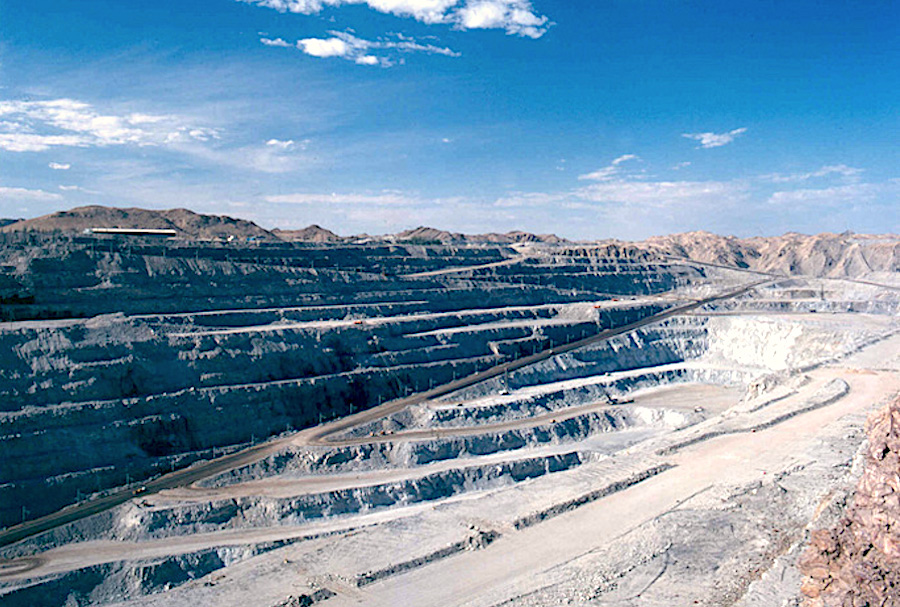
View of Rössing uranium open pit mine. (Image courtesy of Rio Tinto.)
China’s only uranium miner raised around 4 billion yuan ($570 million) as it debuted on the Shenzhen exchange on Wednesday, with its shares more than tripling in value.
The initial public offering comes as China aggressively expands its fleet of nuclear power plants. It has the highest number of reactors in operation and under construction in the world, and may surpass the US and France as the biggest atomic power operator by 2030.
China National Uranium Co., the only firm granted rights to mine the element that’s used as fuel in nuclear reactors, offered 248 million shares at 17.89 yuan each, according to an exchange filing. The stock closed at 67.99 yuan. The company plans to allocate the proceeds to four uranium mines and a handful of other associated minerals, according to another statement.
Uranium prices have rallied over the past four years in anticipation of a surge in demand for the nuclear fuel. The US, Japan and France are among several nations that have pledged to triple nuclear energy capacity by 2050.
Meanwhile, China’s domestic fuel supply has fallen short and the country has relied on imports to meet more than 70% of its demand.
“We will push for global deployment and enhancing supply capacity and competitiveness,” China National Uranium chairman Yuan Xu said, according to Xinhua.
The firm, with a market value of 141 billion yuan, is owned by the state-run China National Nuclear Corp. It mines natural uranium and some other chip-making materials like molybdenum and rare earth chlorides. Its net income rose about 16% to 1.5 billion yuan in 2024 from a year earlier, according to the filing. It acquired a 69% stake in Namibia’s Rossing uranium mine, the world’s sixth-largest, from Rio Tino in 2019.
https://www.mining.com/web/shares-in-chinas-only-uranium-miner-triple-on-shenzhen-debut/
Two global mining giants are evaluating a joint venture in Sudbury, Ont., that could lead to a US$2-billion copper project.
Vale Base Metals Ltd., the Canadian unit of Brazilian conglomerate Vale SA, said Tuesday that Switzerland’s Glencore PLC has agreed to a framework to evaluate extracting the critical mineral from their adjacent properties in the region.
A joint venture would add to a string of planned copper projects in Canada as the mining industry seeks to become a key supplier of the metal used in electric vehicles, batteries, advanced electronics and the infrastructure needed to power it all. Some industry forecasts project demand for copper to double by the middle of the century as the world shifts to a low-carbon economy and the population grows.
Vale said in a statement that the companies will study potential cost savings of mining their deposits using the shaft and infrastructure at Glencore’s Nickel Rim South Mine, which has been wound down. If the venture goes ahead, the companies would deepen the shaft and develop new drifts to reach nearby ore deposits.
There is also the potential to produce other critical minerals, including nickel, cobalt, gold and platinum group metals.
As 50/50 partners, the companies would produce 880,000 tonnes of copper over 21 years. Vale pegged the capital cost at US$1.6-billion to US$2-billion.
The companies will conduct detailed engineering and consultation work next year and expect to make a final investment decision in the first half of 2027, Vale said.
Earlier this year, Teck Resources Ltd. said it was proceeding with a $2.4-billion extension of its Highland Valley Copper Mine, making it the largest critical-minerals investment in B.C.’s history. The development will extend the mine’s life from 2028 to 2046.
Two others – the $2.6-billion expansion of Newmont Mining Corp.’s Red Chris copper mine in Northern B.C. and Foran Mining Corp.’s $1-billion McIlvenna Bay mine in Saskatchewan – were referred this fall to the federal government’s Major Projects Office to be considered for fast-track approvals.
At Vale’s investor day in London on Tuesday, executives said the company aims to nearly double its worldwide copper production to 700,000 tonnes per year by 2035 from 370,000 today.
Vale projects returns from all its copper projects of more than 25 per cent, not including the joint venture with Glencore.
Analysts at the investment bank Jefferies said they do not believe the market has placed full value on these prospects in the company’s share price, and have a buy rating on the stock.

Kamoa-Kakula’s Phase 1 and Phase 2 concentrators. Credit: Ivanhoe Mines
Ivanhoe Mines (TSX: IVN) said copper output next year at its Kamoa-Kakula complex in the Democratic Republic of Congo should lag 2024 levels even as efforts to rehabilitate the site gather pace following seismic-induced flooding.
Contained copper production will likely range between 380,000 and 420,000 tonnes in 2026, before increasing about 30% to 500,000-540,000 tonnes in 2027, Ivanhoe said Wednesday in a statement. The company also maintained its medium-term goal of producing about 550,000 tonnes annually.
“The revised guidance provides the market with long overdue clarity on the near-to medium-term outlook for the company,” Scotia Capital mining analyst Orest Wowkodaw said in a note to clients.
Seismic activity
Mining at the underground operation, which is part of the massive Kamoa-Kakula complex, was halted for about three weeks this spring after seismic activity in May caused flooding in the mine’s eastern section. Kamoa-Kakula produced 437,061 tonnes of copper concentrate in 2024, the last full year before the flood.
Ivanhoe shares gained 6.2% to C$15.27 Wednesday morning in Toronto, boosting the company’s market value to about C$22 billion ($15.8 billion).
Dewatering of Kakula’s flooded areas is 70% complete in the mine’s western zone and 60% in the eastern zone, the company said, adding that dewatering efforts on the western side should be completed by the end of January.
Rehabilitation
Some 13.4 km of underground workings have been rehabilitated so far. This included 4.6 km that have been dewatered, Ivanhoe said.
“Dewatering progress appears slower than expected,” Jefferies mining analyst Fahad Tariq said in a note to clients, calling the 60% figure for the eastern zone a “surprise.”
“Investors might pay more attention to the dewatering progress than the actual guidance numbers, as slower progress on the former results in lower confidence in the latter,” he wrote.
New concentrator
A fully revised life-of-mine plan remains on schedule for completion late in the first quarter, Ivanhoe said.
Management is considering a possible increase in mining rates to as many as 17 million tonnes per year. It will also evaluate a further expansion scenario that includes the construction of a new concentrator.
The updated life-of-mine plan will be “the next catalyst” for Ivanhoe, Tariq said.
About 6 million tonnes of ore are expected to be mined at Kakula next year. That number may rise to between 7 million and 8 million tonnes during 2027, Ivanhoe said. Copper grades are expected to range from 3.5% to 4.5% during the period.
https://www.mining.com/ivanhoe-sees-2026-kakula-copper-output-below-2024-level/
Copper rallied to a fresh record as a surge in orders to withdraw metal from London Metal Exchange warehouses compounded worries that potential US tariffs will fuel a global supply squeeze.
Futures rallied as much as 3.4% in London to trade above $11,500 a ton, surpassing a peak struck on Monday, after data from the LME showed a spike in orders for copper from its depots in Asia. Mining stocks also rallied, with Chilean copper producer Antofagasta Plc jumping more than 5% to a record high.
Copper has been ratcheting higher in recent weeks as a growing chorus of traders and analysts have warned that global inventories could soon be drained to critically low levels as huge volumes of metal are shipped to the US in anticipation of tariffs.
The LME’s benchmark price is up more than 30% this year, with a series of major mine outages denting global supply. But US futures have rallied even further, with investors betting that President Donald Trump will announce levies on primary forms of the metal toward the end of next year.
“Of course with copper there is a really compelling fundamental story, and investors recognize that miners are having real difficulties maintaining and growing supply,” said Helen Amos, a commodities analyst at BMO Capital Markets Ltd. “But there’s also a price arbitrage between the US and the rest of the world, and that’s probably the most dominant factor driving prices higher at the moment.”
Trump first formally laid out plans to impose tariffs on copper in February, in an announcement that rocked the global industry and drove US copper imports to record highs. In late July, he wrong-footed the market by saying he’d limit the levies to value-added copper products, while pledging to review whether to push ahead with tariffs on commodity-grade forms of the metal from 2027.
The decision has had huge ramifications in the physical copper market, with traders once again ramping up shipments to American ports as US futures surge. Producers have also announced that they’ll charge record premiums to supply customers in Europe and Asia next year, with buyers in effect compensating them for the additional profits they could make selling to the US.
Major metals trader Mercuria Energy Group Ltd. last week warned that those trade dynamics could fuel a major global supply squeeze by the first quarter of next year, predicting that copper prices will push even deeper into uncharted territory.
https://finance.yahoo.com/news/copper-hits-fresh-record-orders-100439431.html
Molybdenum market update on December 3, 2025
The domestic molybdenum market overall maintained a relatively weak operation, mainly reflected in insufficient confidence among suppliers to raise prices, slight declines in prices of individual products, and slow order growth. Today, molybdenum concentrate and molybdenum oxide prices consolidated around RMB 3,650 per tonne-degree and RMB 3,750 per tonne-degree respectively, while ferromolybdenum prices decreased by approximately RMB 3,000/ton.
From the perspective of bullish factors, first, affected by the recent obvious price declines, downstream users have shown increased enthusiasm for inquiries and procurement; second, to avoid the risk of cost-revenue inversion, many suppliers have low willingness to ship goods, which to a certain extent has supported the stable operation of many product prices. From the perspective of bearish factors, first, affected by the poor performance of the steel market, steel enterprises continue to press down ferromolybdenum procurement prices, thereby further suppressing the upside space for other molybdenum product prices; second, the continuous weak decline in international molybdenum prices and insufficient confidence among industry players in the future market have made it difficult for the domestic molybdenum market to warm up.
According to the China Iron and Steel Association, from January to October 2025, among the major steel-consuming industries, the construction sector continued to contract while manufacturing maintained steady growth. Specifically, the real estate market remained sluggish; infrastructure construction investment turned from increase to decrease; the added value of the machinery industry maintained growth, with the growth rate of electromechanical product exports slightly declining; automobile production continued to maintain relatively fast growth, with new energy vehicles continuing their rapid growth trend; the shipbuilding industry maintained a high level of orders on hand; production of the three major white goods in the home appliance industry maintained growth; and the decline in container production expanded.
Guinea has shipped its first cargo of iron ore from the long-delayed Simandou project, marking a major milestone for one of Africa’s largest mining developments and boosting the continent’s role in global steel supply chains.
According to the Securities Times, a deep-sea cargo ship carrying 200,000 tons of high-grade iron ore departed the Port of Morebaya at 5:30 pm local time on Tuesday.
The vessel, bound for the Port of Majishan in Ningbo, East China’s Zhejiang Province, is scheduled to arrive on January 15, 2026. The journey typically takes three to four weeks, with extra time for port handling and customs procedures.
The shipment marks the start of commercial exports from Simandou and activates the project’s full industrial chain, connecting mining operations with railways, ports, and shipping.
A Project Decades in the Making
Simandou’s iron has attracted the world’s largest mining companies for decades, but development has been delayed by complex logistics, political instability, corruption allegations, and legal disputes.
In March 2022, Guinea suspended all activity to clarify how the country’s interests would be protected. Operations formally resumed a year later, in March 2023, with a government ceremony marking the start of substantive development.
The following year, China Harbour Engineering Co, a subsidiary of China Communications Construction Co, won the bid to dredge the entrance channel and port basins for the project.
The dredging work, ongoing for 21 months since the project’s resumption, involved the shared channels and port basins. Several consortium-backed groups are now running the mine, and rail transport of ore has begun, with shipments already on their way to international ports.
At inception, the total cost of the project was estimated at $24 billion. It includes four iron ore blocks in southern Guinea and a 600-kilometre railway to transport ore to the coast.
Two main sponsors are leading development: Singapore-based Winning International Group, responsible for Blocks 1 and 2 in the north, and Anglo-Australian mining company Rio Tinto, which heads the Simfer consortium developing Blocks 3 and 4 in the south. Simfer has committed $11.6 billion, including $6.2 billion from Rio Tinto.
Africa’s Largest Untapped Iron Ore Asset
Located in southeastern Guinea, the Simandou deposit is one of the largest and highest-grade undeveloped iron ore resources in the world, with estimates exceeding 4 billion tons and an average iron grade above 65 percent.


